

Trade: What we learned from the latest tariffs skirmish
Colombia backed down at the last minute, allowing the Trump administration to withdraw their tariff threats and we finally got a clear view of what's coming.

Trade policy is going to be about more than trade policy. Perhaps the most important thing we learned last weekend is that the President views tariffs as a hammer in a world full of nails. There have been a few other murmurs about manufacturing, but for the most part, the tariff threats have come with demands to rein in the flow of drugs and people across U.S. borders - a key campaign pledge. That formula was followed precisely last weekend when the administration moved to enact 25% tariffs on all Colombian imports because the President of Colombia refused to accept deported immigrants. The Colombian government eventually backed down, and Trump withdrew the threats, but it’s important to take a moment and remember that none of this was about economics. Colombia is the 25th largest exporter to the U.S. We import mostly raw materials of things like oil, gold, coffee and fresh cut flowers. In other words, the economic linkages are fairly weak. Still, the administration was willing to risk additional inflationary pressure over a small number of deported immigrants. And it worked. Expect Trump to return to this playbook often to extract all kinds of noneconomic concessions from trading partners.
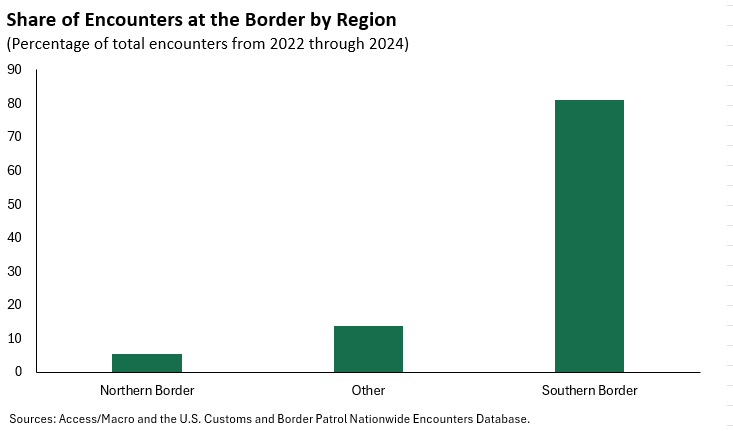
Next up: Canada, Mexico, and the USMCA. Before the dust up with Colombia, Trump’s declaration that he would slap tariffs on Canadian and Mexican imports on February 1st dominated economic headlines. Our latest research note took a look at what the inflation implications would be if tariffs, as have been discussed, were enacted on our two largest trading partners. There is an email below if you’d like access to our analysis, but the abbreviated version is that it would create additional inflation and potentially cause the Fed to raise rates in the second half of the year. And what has the President asked for to avoid that scenario? He wants Canada and Mexico to stem the flow of drugs and people across our borders. But as the figure below points out, it’s odd to lump those two countries together. The Customs and Border patrol recorded over 15 times the number of encounters at the southern border compared to our larger northern border. From an immigration and enforcement perspective, these two borders couldn’t be farther apart. So why not save Canada and just go after Mexico? Because the President, always eager for quick wins, would like to renegotiate the USMCA trade agreement in 2025, rather than the previously agreed upon 2026 timeline. Canada and Mexico have every reason to acquiesce. And as we saw this weekend, when the President gets what he wants, tariff threats evaporate in a matter of hours.
The Fed may have to recalibrate in uncomfortable ways. If tariffs on Colombian imports would have been modestly inflationary, particularly for coffee which is already reeling from poor harvests in Brazil, tariffs on Canadian and Mexican imports could be game-changing for the Fed. As we started discussing last spring, growth in the Fed’s preferred inflation measure stalled out in the fall, causing policymakers to transform into hawks at the December FOMC meeting. Many are worried about the impacts of tariff and immigration policy on price growth. With the pace of deportations picking up and the increased use of tariffs as a threat creating a greater likelihood that someone will test Trump’s resolve, it’s increasingly likely the Fed will have to make some uncomfortable choices later this year.
____________________________________________________________________________________________
Don’t miss out on our latest research note, which lays out what’s ahead for tariff policy and what that means for the inflation outlook. Send an email to research@accessmacro.com to learn more and find out how to get access to all our research and detailed economic and financial forecasts.