

More hiring. More layoffs. Why you should be doing more of both.
America's employers may come to regret their hiring freeze.

Two ugly current features of the US labor market are closely related:
“Low hire, low fire”: Employers are restraining headcount growth by turning down the hiring dial rather than cranking up the layoff dial.
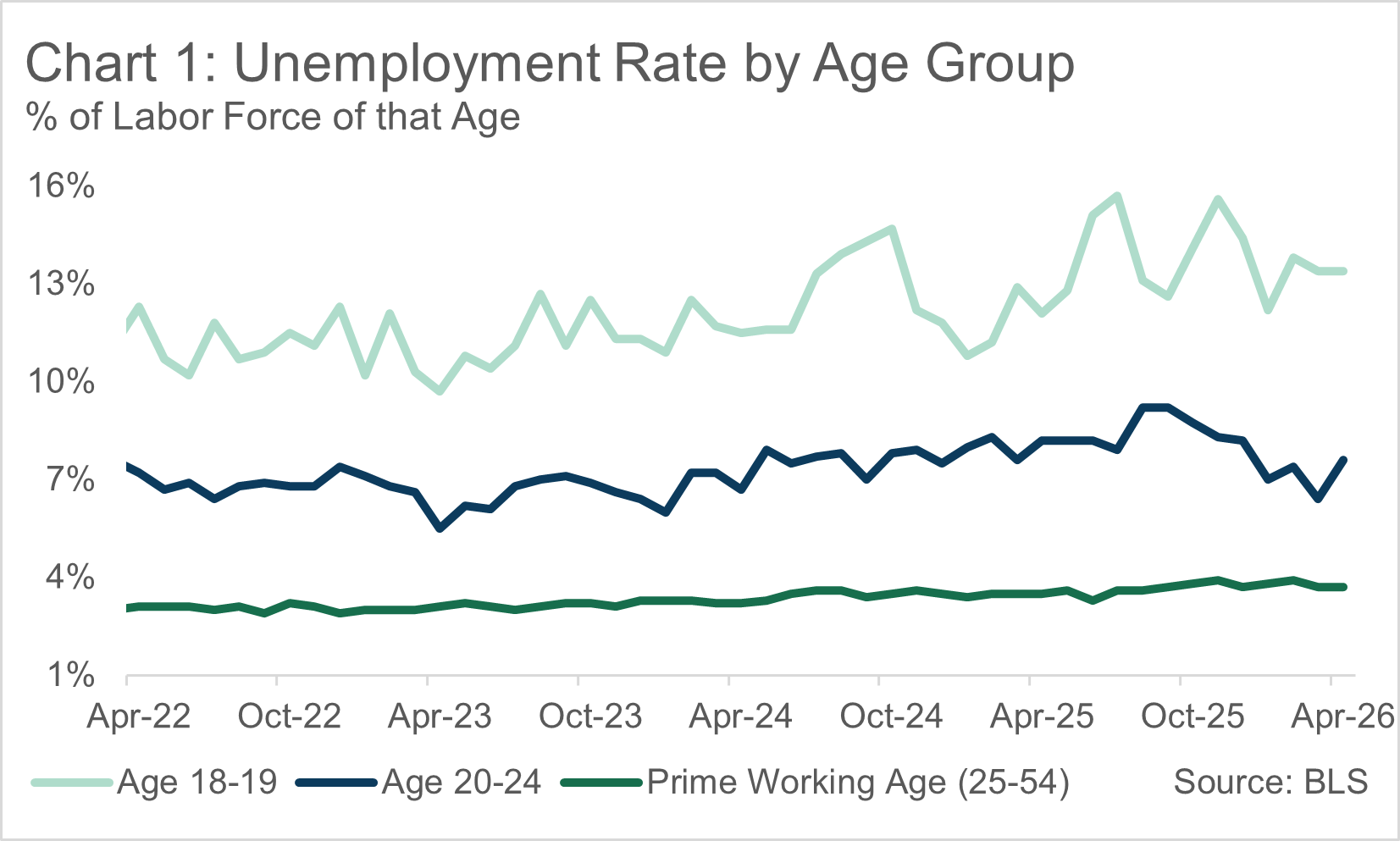
“No country for young people”: The labor market has deteriorated much more for young people (of all education levels; not just college grads) than for prime working-age Americans.
Gross hiring, the number of folks starting new jobs, was red-hot in 2021 and into the beginning of 2022. But early that year, it began a large decline. By late 2023, hiring had not just returned to normal but crossed over into “unusually low”. Employers, who faced slowing demand growth after the initial burst of post-pandemic recovery, were trying to right-size their workforce through weak hiring. Hiring rates are currently comparable to early 2010s levels, when unemployment was far higher than it is today.
However, employers were reluctant to accelerate this right-sizing process through a wave of layoffs. Layoffs did increase modestly from 2021-22 levels, but remain very low by historic levels (despite doom-filled headlines triggered by tech sector layoff announcements). The reason for this is not entirely clear. Perhaps firms are still traumatized by the rapid post-pandemic recovery, when prior layoffs suddenly left them short-staffed. It’s also possible that a combination of uncertainty and a relatively stable economy (no recession) has convinced them that they can take their time via gradual attrition.
But regardless, this “low hire, low fire” environment has a powerful distributional effect on America’s workforce. Older workers, who are generally likely to already have a job, remain at low risk of layoff. The weak hiring environment does hurt them a little - the pace of pay increases has slowed due to fewer outside opportunities, and people who hate their jobs reluctantly “hug” them because there’s so little out there. But people who don’t have jobs bear the brunt of weak hiring, and because layoffs are so low, the hiring freeze overwhelmingly impacts the young. The unemployment rate for people of prime working age has increased slightly over the past 3 years, but not nearly as much as for people in their early 20s and late teens.1
Both of these features regularly land in the business section of the newspaper, if not on the front page.2 But that discussion is focused primarily on the short term, despite being a phenomenon with possible long-term repercussions. Those repercussions on the business side are the subject of this month’s post.